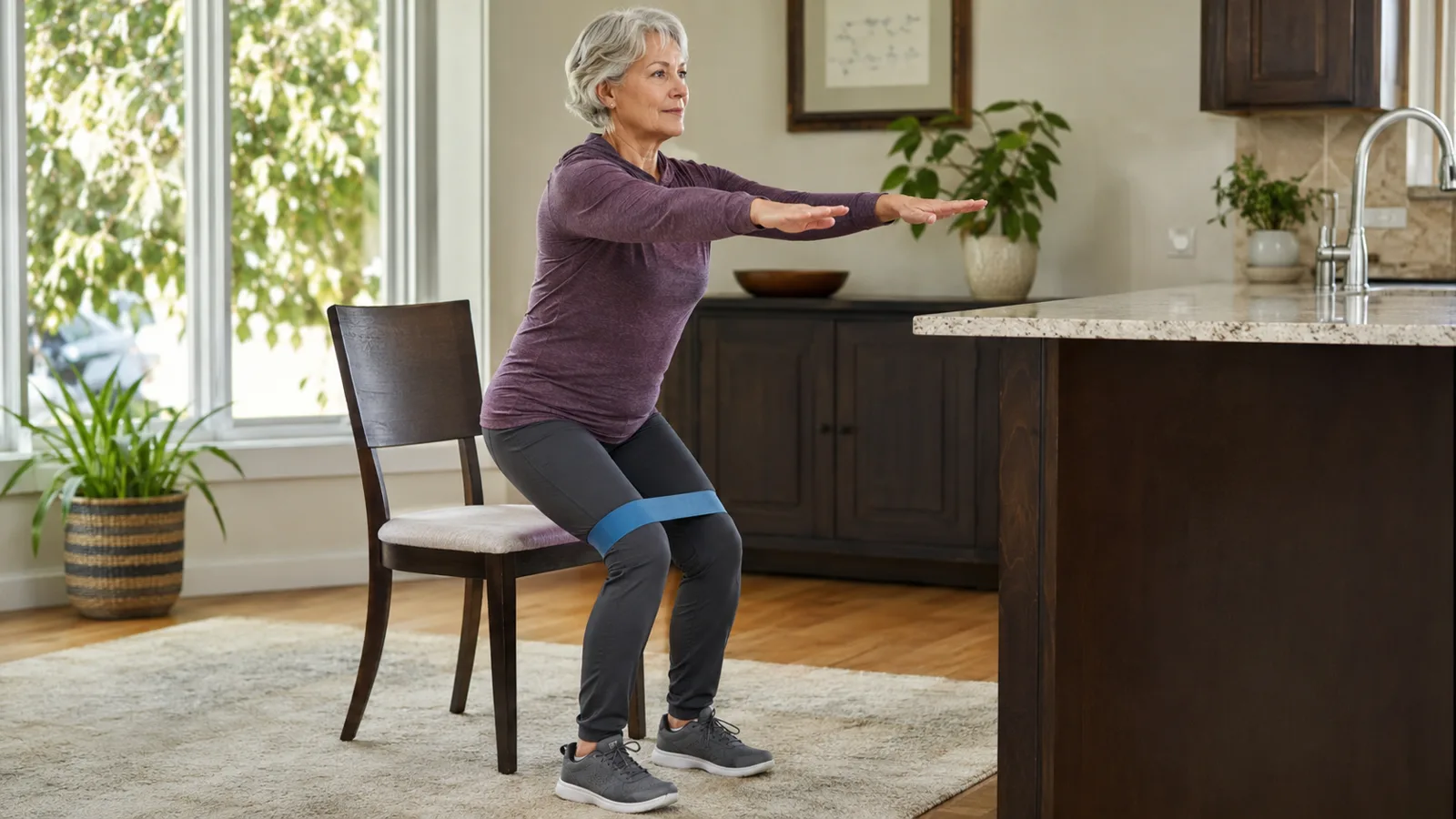
If you have knee arthritis, you have probably heard both of these: "never train through pain" and "exercise is the best medicine". Take the first one literally and you never move. Take the second one literally and you feel like a failure every time the knee hurts.
The truth is in the middle. The UK's health guideline body, NICE, recommends exercise for osteoarthritis, including strengthening the muscles around the joint and general fitness. It also says pain may go up a bit at first, and that sticking with it can improve pain, function and quality of life.
So some discomfort is normal. Not every pain is normal. The trick is knowing which is which. That's what this traffic light is for. It's a way to make decisions, not a diagnosis, and not a replacement for a physio's plan.
Before you start: know your normal
Before each session, note three things:
- how much your knee usually hurts or feels stiff at this time of day,
- whether it's more swollen, warm or wobbly than usual,
- what you managed last time without problems.
The traffic light compares today with your own normal, not with someone else.
🟢 Green: carry on
Green doesn't mean zero pain. It means:
- the discomfort is mild or familiar,
- you move with control,
- you are not limping more as the set goes on,
- it settles when you stop,
- the knee is not clearly worse that evening or the next morning.
Green = do the plan. Want to progress? Change one thing: a rep or two more, a slightly lower chair, a bit more weight, one more walking block.
🟠 Amber: change something
Amber is: clearly more pain than normal, stiffness that changes how you move, a new slight limp, or symptoms that stay up longer than usual after training.
Don't throw away the whole week. Change one thing:
- smaller range of movement,
- higher chair,
- use your hands for support,
- fewer reps or less weight,
- split the walk into shorter blocks,
- an extra rest day.
Then watch the next 24 hours. If it settles, that's your working level for now. If amber keeps coming back or gets worse, get it looked at.
🔴 Red: stop and get checked
- a hot, clearly swollen knee,
- a knee that locks or keeps giving way,
- you can't put weight on it,
- after a fall, twist or knock,
- a swollen calf,
- fever,
- bad night pain that is not your usual,
- suddenly losing a lot of function.
Red is not "strengthen through it". Stop and see a doctor soon. Emergencies go to emergency services.
A simple starting session
Assuming these movements are OK for you:
1. Chair rise. Firm chair, lean slightly forward, push through both feet, use hands if needed. One set of five, slowly. To make it easier, use a higher chair before you reach for your hands.
2. Low step-up. Hold a rail or counter, lowest step you have, four slow reps per leg. Amber? Just shift your weight onto one foot with the other toes still on the floor.
3. Walking in blocks. Two to five easy minutes, short rest, repeat. Several small blocks add up.
Stop while the last rep still looks like the first one. More is not always better here.
The next-morning check
The session isn't finished when you stop. Check the next morning:
- Is the stiffness back to normal after you've moved around a bit?
- Is the swelling the same as usual?
- Can you do stairs and chairs like normal?
- Do you feel more or less confident?
Clearly worse? Do less next time. Don't swing to the other extreme of doing nothing or going extra hard to "make up for it".
The knee is not alone
Hip strength, calf strength, balance, sleep, body weight where relevant, and fear of moving all affect how your knee feels. NICE lists exercise, and weight management where it applies, as core treatment. That's not a punishment. It's what works.
Braces, massage and other passive treatments can help, but they shouldn't replace actually training. And training is never a reason to ignore red flags.
Start boring
For two weeks, do the same small session twice a week and note the colour each time. First you find a dose your knee tolerates. After two green weeks, change one thing. That gives you something no generic article can: a record of how your knee responds.