Falls are common as we get older, but they are not just "part of ageing". A lot of them happen at home, on a route you walk every day, because of something stupid: a rug, a cable, a dark corridor at 3 am.
Your home may look tidy. That's not the test. The test is: can you walk through it half asleep, in a hurry, carrying a laundry basket, on a bad day?
So do this: walk your real daily routes. Bed to toilet. Sofa to kitchen. Front door to the street. Look for anything that makes you take an unexpected step, reach or turn.
Corridors and living room
- A clear path you can walk without turning sideways.
- Cables away from walking routes.
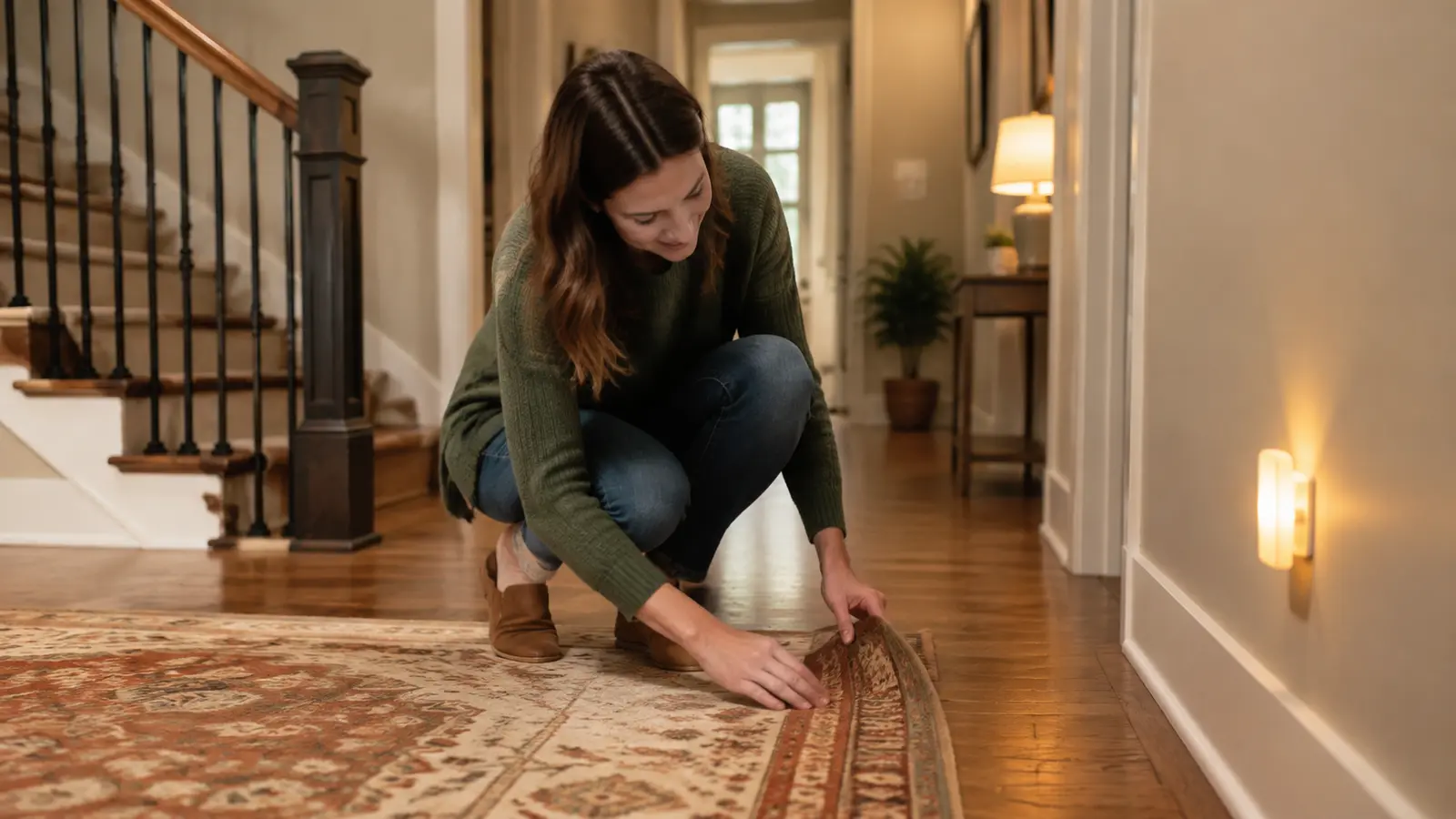
- Loose rugs taped down or gone. "It never tripped me" means nothing. Your shoes, eyesight or balance can change.
- Stuff you use every day between waist and shoulder height.
- A proper step stool with a handle for high shelves. Not a kitchen chair. Not a swivel chair. Ever.
- Chairs that are stable and high enough that you don't have to throw yourself forward to stand up.
Stairs and the front door
- Good light on every step, with a switch at the top and bottom.
- A solid handrail. Ideally on both sides.
- Nothing parked on the steps "just for a minute".
- Loose boards and uneven bits repaired.
- Outside steps clear of wet leaves, moss and ice.
- If the first or last step is hard to see, a strip of contrasting tape on the edge.
Bathroom
The most dangerous room: water, turning and low seats.
- Non-slip mat or surface in the bath or shower.
- Grab bars, properly fixed into the wall. A towel rail is not a grab bar. It will come off the wall the day you need it.
- A shower chair and handheld shower if standing in the shower gets tiring.
- Light on the way to the toilet at night. A small motion-sensor light is cheap and works better than your memory in the dark.
Bedroom and your feet
- A lamp you can reach from bed, plus your glasses or walking aid if you use them.
- Bed height so your feet are flat on the floor when you sit on the edge.
- No walking around in socks or loose slippers on smooth floors. Shoes or slippers that fit and grip.
The part a checklist can't fix
Tidying is half the job. The other half is you: eyesight, foot problems, blood pressure that drops when you stand up, weak legs, and medicines that make you dizzy or sleepy.
So:
- Tell your doctor about every fall, even when nothing broke. A fall is information.
- Ask for a medication review if you take several medicines.
- Get your eyes checked.
- Train your legs and your balance. Strong legs catch you when the rug doesn't.
The CDC's fall-prevention programme (STEADI) works exactly like this: check the risk, fix what can be fixed, and combine exercise, medical checks and home changes.
Don't buy everything at once
Start with the routes you use every day and the spots where you've already had a near miss. Some jobs need a landlord, an electrician or an occupational therapist. A badly fixed grab bar is worse than none, because it gives you false confidence.
Myths
- "Falling is just what happens when you get old." The risk can often be reduced.
- "I took the rugs out, I'm safe." Eyes, medication, blood pressure, feet and strength matter too.
- "I didn't get hurt, so no need to mention it." Mention it.
- "The most expensive gadget is the safest." Choosing the right thing and fitting it properly is what counts.