I love walking. Keep doing it. It's great for your heart, your head and your legs.
But "I walk every day, so my bones are covered" is wishful thinking. Bone is living tissue that reacts to load. When it gets the same easy load every day, like a flat walk at the same pace, it has no reason to get any stronger.
So the question is not "do I move?" but: which kinds of load do my bones get every week? There are four.
Before we start: if you have osteoporosis, have broken a bone from a small fall, or have unexplained back pain, read the safety check at the bottom first.
1. Carry your own weight
Anything where your skeleton holds you up against gravity: walking, stairs, dancing, hiking. Swimming and cycling are excellent for your heart, but they don't load your bones the same way, because the water or the bike carries you.
If you do nothing right now, regular walking is a great start. Then make it a bit harder: walk faster, find a hill, take the stairs.
2. Pull on the bone with muscle
When a muscle contracts hard, it pulls on the bone where it attaches. That is a different and stronger signal than walking. This is why strength training matters so much for bones.
Good basics:
The key word is challenging. Lifting something you could lift fifty times doesn't send much of a signal. Over weeks, the weight has to go up. "Heavy" is personal. Don't copy the person next to you, just make it hard for you.
3. Change direction and speed
Bones get used to the same movement. Side steps, dancing, changes of direction or small hops give them a load they are not used to.
The International Osteoporosis Foundation notes that mixing different types of loading can help limit bone loss. But impact is not for everyone. If you have osteoporosis, previous fractures, poor balance or painful joints, don't add jumping or fast twisting without individual advice.
A safe way to start for most people:
- normal forward walking,
- side steps while holding a counter,
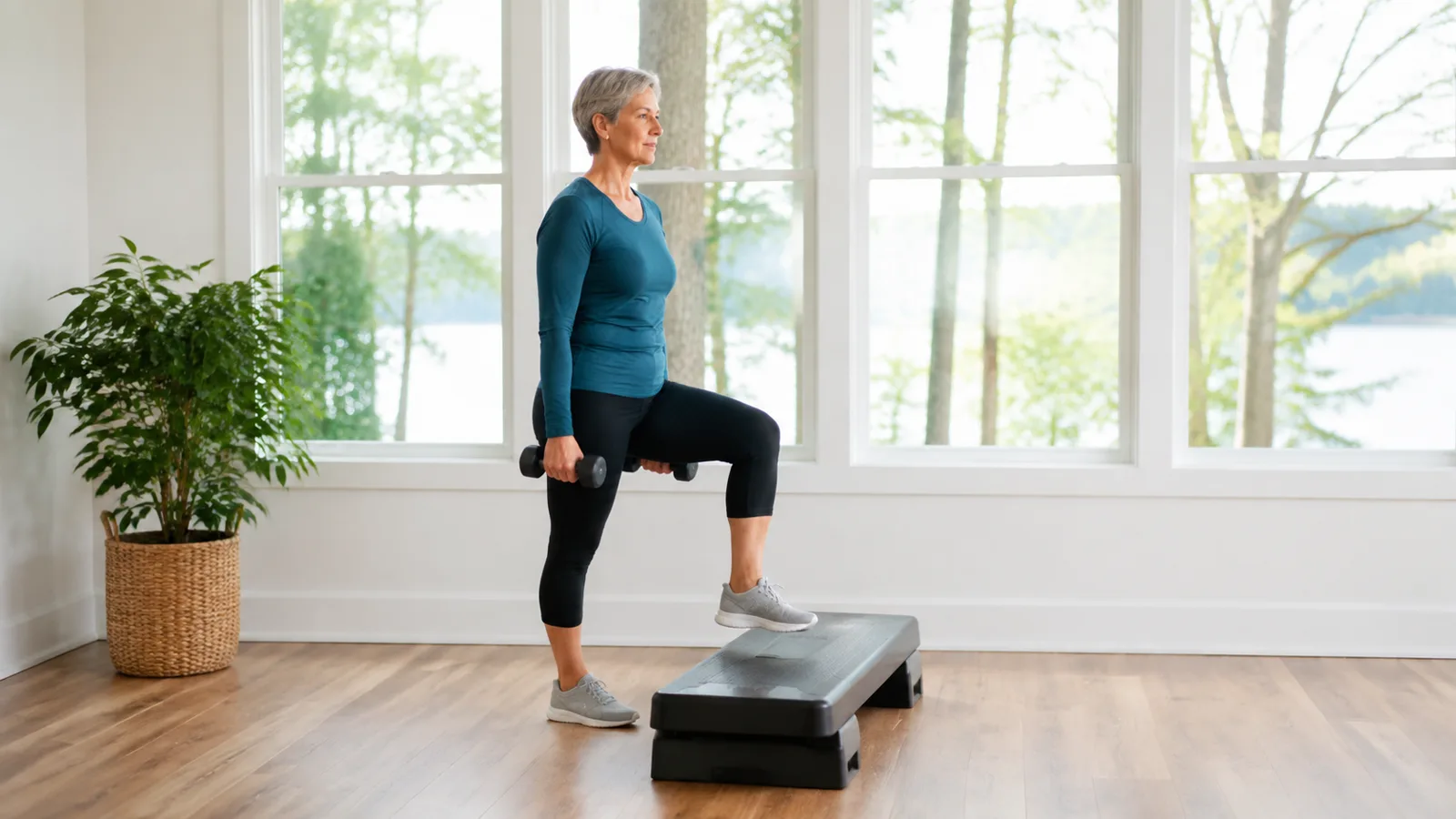
- controlled step-ups,
- gentle changes of direction in an open space.
4. Protect the landing
Broken bones mostly happen in falls. So it is not only about how strong your bones are, but also about whether you fall at all. Leg strength, balance, eyes, medication, shoes and the stuff lying around your house all matter.
Balance practice doesn't load your bones directly, but it protects them. See my balance training at home.
What a week can look like
For a generally healthy, active person:
- Monday: strength: squats or chair rises, rows, step-ups, carries
- Tuesday: a brisk walk with some hills, plus side steps at the counter
- Thursday: strength again
- Saturday: a walk on varied (but safe) ground, or dancing
- Most days: two minutes of balance next to the counter
This is an example, not a prescription.
Safety check before adding impact or heavy spinal loading
Ask yourself:
- Have I broken a bone from a small fall or an ordinary movement?
- Have I been told I have osteoporosis or very low bone density?
- Have I got shorter, or do I have back pain without a clear reason?
- Do I take medicines, or have a condition, that affect my bones?
- Is my balance good enough for this exercise?
A "yes" doesn't mean "don't exercise". It means pick your exercises with your doctor or a physio.
Exercise is not the whole story
Calcium, vitamin D, enough protein and decent food overall matter too. Smoking and a lot of alcohol hurt your bones. If you take medication for osteoporosis, don't swap it for exercise or supplements on your own.
And honestly: no exercise plan can guarantee you will never break a bone. The research shows benefits for bone density, strength and fall risk. That's a good deal. It's not a force field.
Bottom line
Keep walking. Then add muscle (lift things), variety (change direction) and balance. That's four signals instead of one.