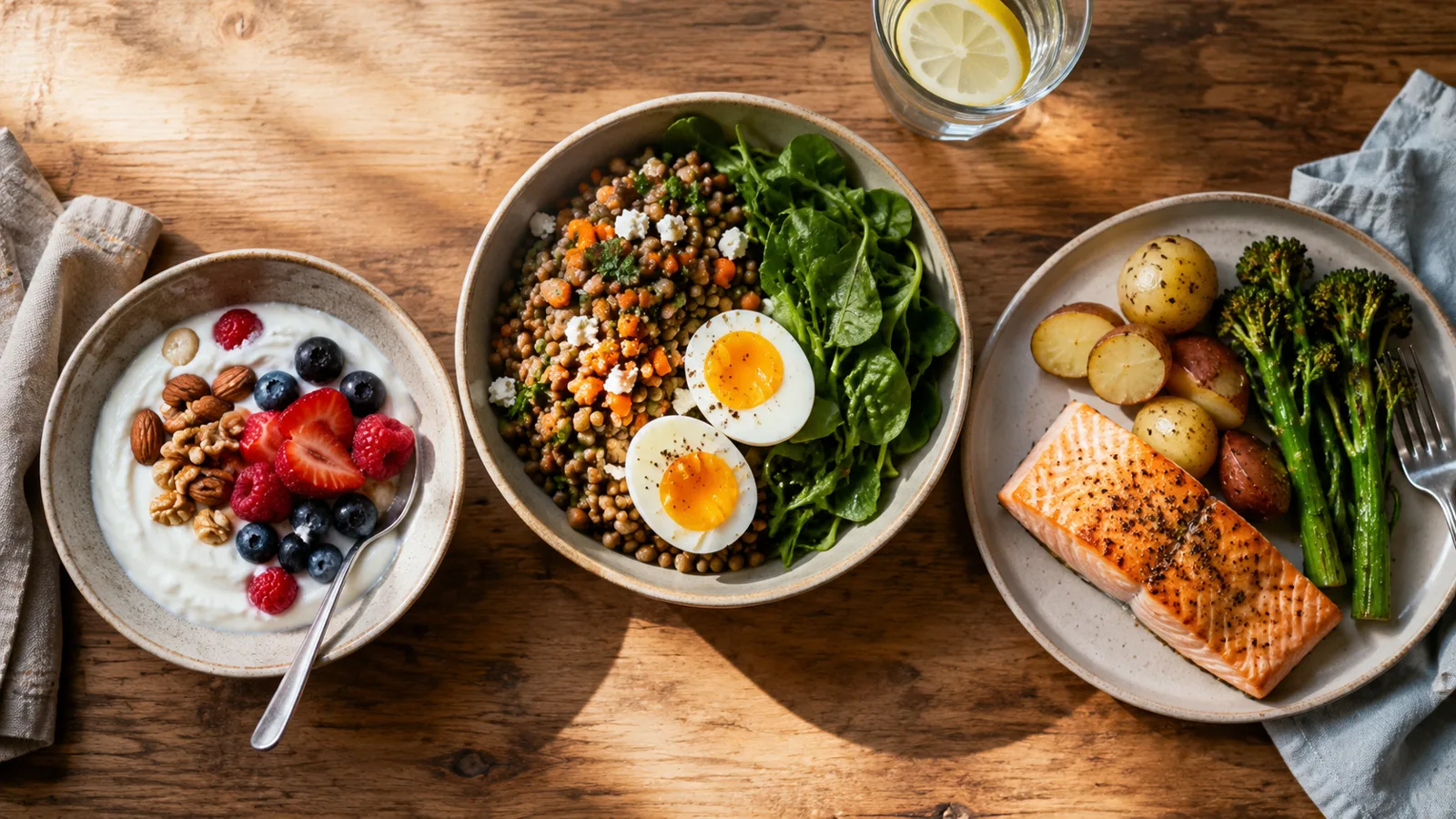
Protein advice usually starts with a number and ends with a tub of powder. The hard part gets skipped: turning that number into meals you actually want to eat.
And here's the thing. Protein alone doesn't build muscle. Training gives your muscles the reason to grow. Enough food gives them the energy. Sleep lets you repeat it. Extra protein can't save a body that never lifts anything. And one huge dinner doesn't make up for an empty breakfast and lunch.
So let's fix the meals, not buy supplements.
How much?
The standard adult reference is 0.8 grams per kilo of body weight per day. For older adults, specialists often say more. The European clinical nutrition society (ESPEN) says older people should get at least 1.0 g/kg a day, adjusted for health, activity and appetite, and mentions 1.0–1.2 g/kg for healthy older adults.
Example: someone of 75 kg would be around 75–90 grams a day.
That's a guide, not your personal prescription. If you have kidney disease, are ill, have wounds, are losing weight without trying, or have a lot of fluid retention, let a doctor or dietitian set your number.
Step 1: find the empty meal
Don't count grams for a week. Just look at yesterday and ask: which meal had no real protein in it?
Very common: toast with jam for breakfast, a bowl of soup for lunch, then all the protein at dinner. The fix isn't a bigger dinner. It's fixing the empty meal.
An anchor is a protein food you could clearly see on the plate if you took a photo from above: yoghurt, eggs, fish, chicken, tofu, tempeh, beans, lentils, cottage cheese.
Step 2: three anchors a day
Breakfast
Doesn't have to be steak and eggs.
- Greek yoghurt or skyr with oats, nuts and berries,
- two eggs on whole-grain toast with beans,
- porridge made with milk or soy drink, yoghurt on the side,
- tofu scramble with vegetables and toast.
Ignore "high protein" on the box. Ask: is there a real protein food in this breakfast?
Lunch
Lunch fails because it's improvised. Use one plus one: one main anchor plus one helper.
- lentils + egg,
- bean soup + yoghurt,
- tuna + whole-grain bread,
- tofu + edamame,
- cottage cheese + seeds + rye crackers.
Great for plant-based eating too: a decent portion of beans or soy plus a second source, and you don't need amino-acid charts.
Dinner
Keep your normal dinner, but give the protein its own place on the plate, without pushing out the vegetables and grains. Salmon, chicken, tofu, tempeh, beans, lentils: all fine.
The 0–1–2 check (no calculator)
For three days, score each main meal:
- 0: no real protein,
- 1: some, but more by accident,
- 2: a proper anchor.
2–2–2 every day is the goal. Keep getting a 0 at the same meal? Fix that one first.
Science hasn't found one perfect gram amount at perfect times for everyone. But leaving one or two meals almost empty every day makes it hard to reach a decent total.
Protein powder?
It's handy when appetite, chewing, travel or a crazy schedule makes food hard. It's not better than food. And those "muscle" blends with ten extra ingredients add more question marks: the US NIH notes that ingredient combinations in sports supplements are often less studied, and the amounts can vary a lot.
Before buying, ask yourself:
- Is there really a gap, or is it marketing?
- Could yoghurt, milk, soy drink, eggs, tofu or leftovers fill it?
- What else is in the tub?
- Kidney disease, medication or swallowing problems? Ask a professional first.
More is not always better
High protein can turn into bad eating if it pushes out vegetables and fibre, means a lot of processed meat, or turns every snack into a "protein bar". You want enough protein in a good overall diet, not the maximum.
And train. At least twice a week. Start with the home leg workout if you don't know where to begin.
Try it for a week
- Dinner stays the same.
- Add a breakfast anchor on four days.
- Add a one-plus-one lunch on four days.
- Note energy, fullness, appetite and whether it was easy, not just grams.
- Keep only what you'd happily eat again.