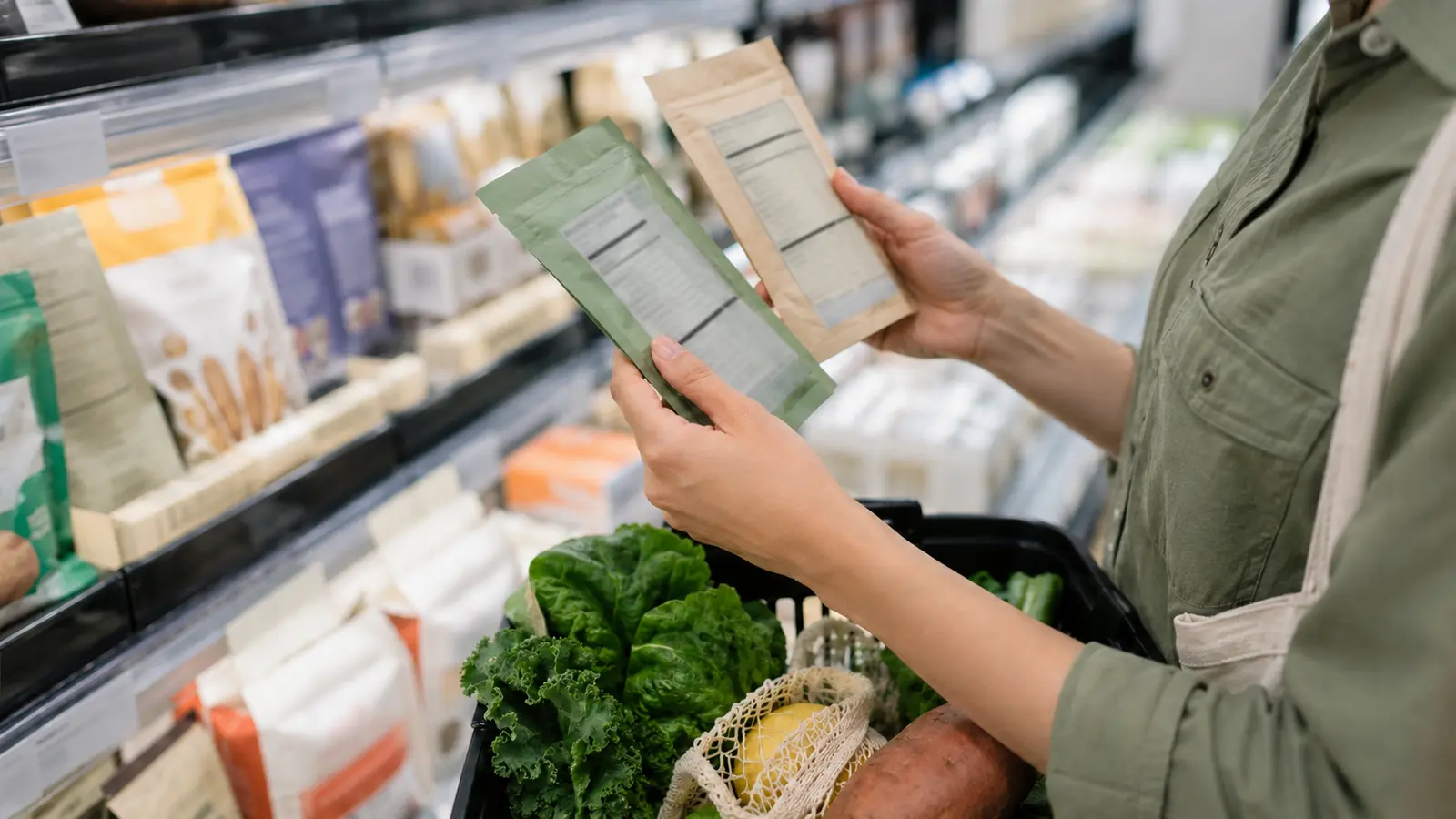
The front of a food packet is advertising. "Natural", "high protein", "light", a picture of a happy farmer. The back is where the information is.
A nutrition label is best for one thing: comparing two products you might actually buy. It's not a judge that decides whether you're a good person. Read it in the same order every time and it gets easy.
(The details below follow the US-style label. Labels look a bit different in Europe and elsewhere, but the logic is the same.)
1. Serving size first
Every number on the label is for one serving. Packet says two servings and you eat the whole thing? Double everything.
The serving size is a reference amount, not a recommendation for you. And watch out: one soup can look lower in salt just because its "serving" is smaller. Compare the same amounts.
2. Use the % as a quick comparison
% Daily Value shows how much one serving gives you compared with a general daily reference. Not your personal target, but a good shortcut.
The US FDA's rule of thumb: 5% or less per serving is low, 20% or more is high.
Useful things to compare: saturated fat, salt (sodium), added sugar and fibre. Protein too. With kidney disease, diabetes, undernutrition or other conditions, your needs can be very different.
3. Total sugar vs added sugar
Milk and fruit have natural sugar. Added sugar is what the factory put in. Plain yoghurt and sweetened yoghurt can show similar total sugar but very different added sugar.
Ingredients are listed from most to least by weight. Sugar hides under lots of names, so the "added sugars" line is faster than hunting through the ingredients.
4. Salt across the whole day
Bread, sauces, soup, sliced meats and ready meals add lots of salt, even when they don't taste very salty. Compare brands instead of banning whole categories. Lowering salt a bit in foods you eat every day beats searching for the perfect product. More in cutting salt without bland food.
5. Read the ingredients
The numbers tell you how much. The ingredients tell you what it's made of. For bread and cereal, a whole grain should be near the start of the list. For "high protein" or "natural" products, check that the ingredients and numbers actually back up the claim.
A short list isn't automatically healthy, and a long list isn't automatically bad.
The 60-second method
Choosing between two similar products:
- make the serving sizes comparable,
- pick the one or two things that matter for your goal,
- compare the amount and the %,
- check added sugar separately,
- scan the ingredients for allergens and what's really in it,
- decide based on your whole diet, the price, and what you'll actually eat.
Don't pick a product because of one nice number printed big on the front.
Myths
- "Serving size is how much I should eat." It's a reference, not a prescription.
- "5% means 5% of the packet." It's 5% of a daily reference, per serving.
- "Total sugar and added sugar are the same thing." Added sugar is part of total sugar.
- "'Natural' means healthy." The front is marketing.
- "The lowest-calorie option is always best." Food is more than one number.
Kidney disease, diabetes, allergies, pregnancy or recovering from an eating disorder? Your needs may be different. A dietitian can help.