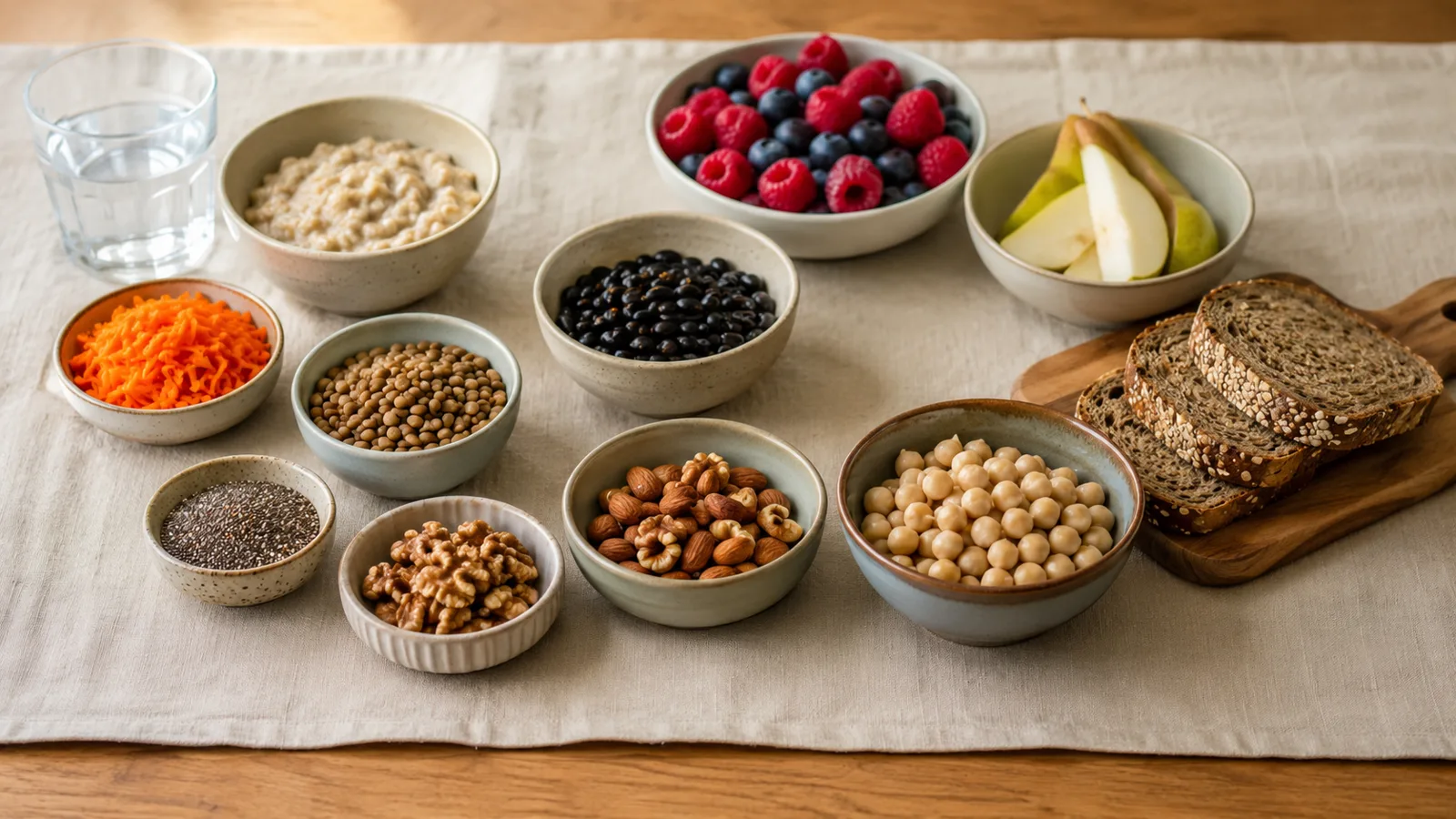
"Eat more fibre." Good advice. And this is how most people do it: switch to brown bread, buy bran cereal, eat a huge bean salad and start a fibre supplement, all in the same weekend. By Monday they're bloated, in pain, and convinced fibre "doesn't agree with them".
Your gut got four changes at once. The problem wasn't the fibre. It was the dose, the speed, and not drinking enough.
So here's the slow way. One change every few days, for 14 days.
First: when it's not a fibre problem
See a doctor, don't just eat more bran, if you have:
- blood in your stool, or black stool,
- weight loss you can't explain,
- vomiting that doesn't stop, or a fever,
- strong or worsening belly pain,
- you can't pass stool or wind,
- a change in your bowel habits that sticks around,
- constipation that started with a new medicine.
Especially when you're older, a sudden change in your bowels deserves a check.
If you have a narrowed bowel, inflammatory bowel disease, trouble swallowing, a fluid limit, kidney or heart failure, or a doctor told you to eat low-fibre: follow their advice, not this article.
How much fibre?
The US digestive health institute (NIDDK) says adults need roughly 22–34 grams a day, depending on age and sex, plus enough fluids so the fibre can do its job. That's a range to work towards slowly, not where you start tomorrow.
Different foods bring different kinds of fibre: oats, beans, fruit, vegetables, nuts, seeds, whole grains. Variety is good, but not all at once.
Days 1–3: just watch
Eat normally. Write down:
- the main fibre foods you ate,
- how often you went to the toilet and how easy it was,
- any bloating or pain,
- roughly how much you drank,
- medicines or supplements that affect your gut.
Days 4–6: add one thing
Pick one:
- porridge oats for breakfast,
- one pear or a handful of berries,
- a small portion of cooked vegetables at dinner,
- whole-grain bread instead of white, once a day.
Everything else stays the same. Cooked vegetables are often easier than a giant raw salad. Chew properly. Drink normally.
Days 7–9: a little bit of beans
Two to four tablespoons of lentils, chickpeas or beans in a meal you already know. Rinse tinned beans if you like. Not a giant restaurant burrito bowl.
- lentils in your soup,
- chickpeas on a salad you already eat,
- beans mixed into mince or tofu,
- hummus with lunch.
Too much gas? Go back to the last amount that was fine. Don't decide "beans are impossible for me".
Days 10–12: two sources per meal
Two normal sources, neither one huge:
- oats + berries,
- whole-grain toast + beans,
- lentil soup + vegetables,
- yoghurt + fruit + a few nuts,
- potato with the skin + cooked greens.
Days 13–14: what worked?
- Which addition was easiest to keep doing?
- What caused discomfort, and was it the food or just too much at once?
- Did you drink enough to keep up?
- Is going to the toilet better, the same or worse?
Keep the two things that worked for the next week. No medal for finishing the plan if your belly hates it.
Drink, but don't overdo it
Fibre needs fluid. But "drink loads of water" isn't right for everyone, especially with a fluid limit or certain conditions. The simple rule: don't push your fibre up while you barely drink. Tea, coffee, milk and watery foods count too. Alcohol doesn't.
Food first, supplements later
Fibre supplements help with some conditions, but products differ, and some can affect when your medicines work or be dangerous with swallowing problems. Ask a pharmacist, dietitian or doctor before you start one. And don't use a supplement to hide a problem that should be checked.
The comfort score
Rate each day 0 to 3:
- 0: no change,
- 1: a bit more wind, normal day,
- 2: uncomfortable bloating, or less appetite: stay at this step,
- 3: pain, vomiting, a hard swollen belly, or you can't pass stool or wind: stop and get advice.
Bottom line
The goal after 14 days isn't a magic number. It's two or three fibre foods your body is fine with, portions that work, and a way to add more slowly. Good eating is built from meals you repeat, not one heroic bowl of bran.