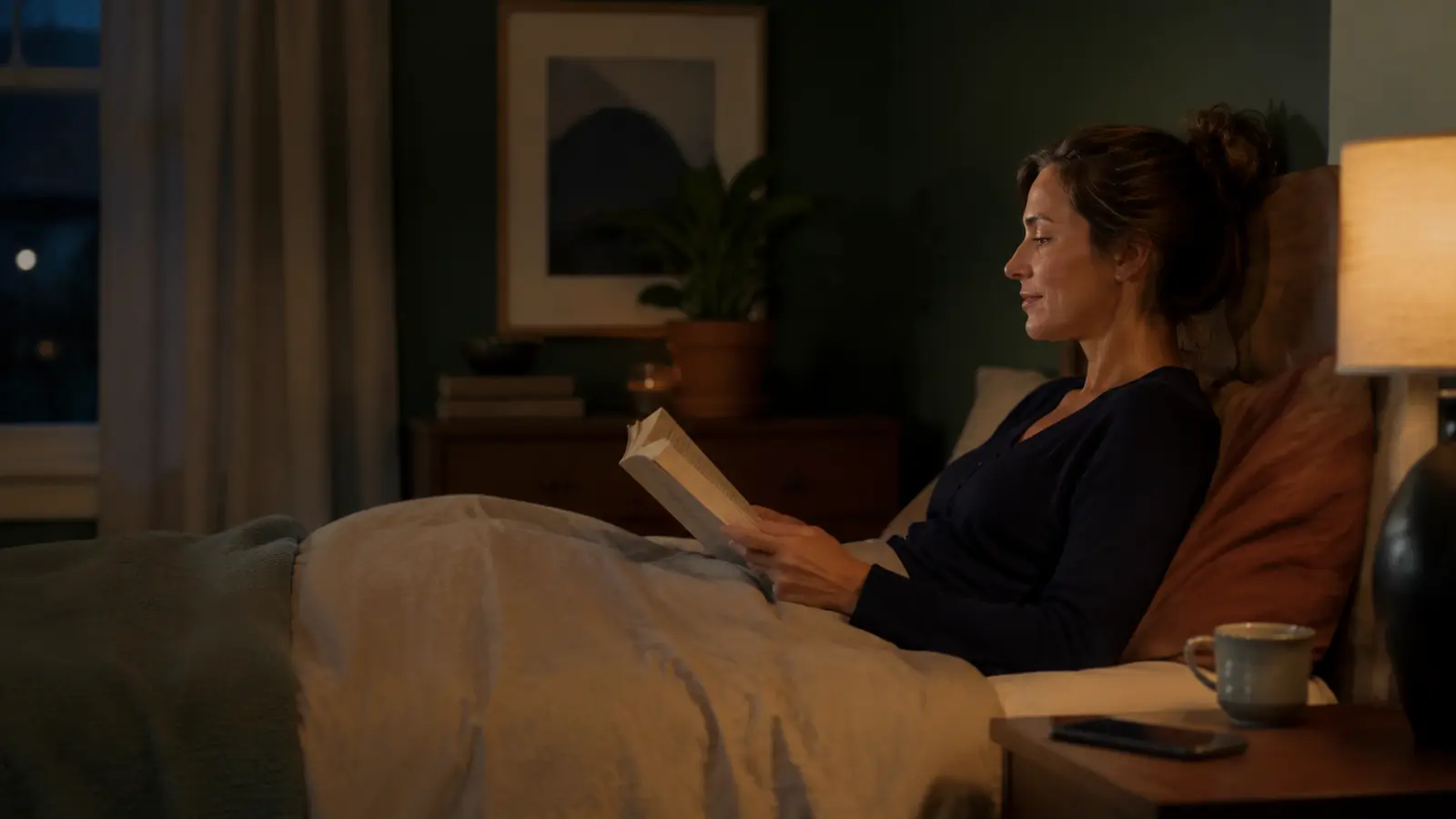
Most sleep tips lists skip the most important question: what exactly is your problem?
Not falling asleep, waking up five times, simply not giving yourself enough hours, shift work, loud snoring, being dead tired all day: those are different problems. A darker bedroom might fix one and do nothing for the other.
Good sleep is about how long, how well, when and how regular. Here's how to figure out where your problem is.
7 hours is a guide, not a verdict
The CDC says adults aged 18–60 generally need at least seven hours. The advice changes with age, and people are different. And time in bed is not the same as time asleep.
One bad night doesn't mean you have a sleep disorder. The real questions: does it keep happening? Do you give yourself enough time to sleep? Does it affect your days, or your safety?
Step 1: a 7-night log
For a week, write down:
- when you went to bed, and when you tried to sleep,
- roughly how long it took to fall asleep,
- times you remember waking up,
- when you woke up for good, and got out of bed,
- naps, coffee and alcohol, and when,
- whether you were unusually sleepy during the day,
- anything special: shifts, illness, pain, caring for someone.
Not a medical test. Just a way to see if the problem is too little time, chaotic timing, constant waking, or something that needs a professional.
Step 2: four basics that actually have backing
The US heart, lung and blood institute (NHLBI) recommends a regular schedule, a sleep-friendly room, no heavy meals or alcohol close to bedtime, and a calm hour before bed. Foundations, not cures:
- Give yourself enough time. No routine fixes six hours in bed when you need seven or eight.
- Keep the timing regular. Going to bed at 23:00 on weekdays and 03:00 on Saturday messes up your rhythm.
- Make the room work. Dark, quiet, a bit cool.
- Be honest about coffee and alcohol. The afternoon coffee might be the problem. Alcohol makes you drowsy at first, but tends to make the second half of the night lighter and broken.
Exercise during the day is part of good sleep. When it's "too late" in the evening is personal. Check your own log instead of believing "never train after 18:00".
It's not always your phone
Bright screens before bed can make winding down harder. But blaming everything on your phone is lazy. Work, stress, pain, breathing problems at night, restless legs, menopause, medication and mental health can matter much more.
Want to test something? Change one evening thing for a few nights and keep everything else the same. Change coffee, exercise, bedtime and screens all at once and you'll never know what worked.
Good habits are not insomnia treatment
Habits can help prevent some sleep trouble. But real, ongoing insomnia is a medical problem. The NHLBI lists cognitive behavioural therapy for insomnia (CBT-I) as a treatment. Telling someone with chronic insomnia to "just relax" is not helpful.
Sleeping pills, over-the-counter sleep aids and supplements can have side effects and interact with other medicines. "Natural" doesn't mean safe or effective for you. Don't start anything because of a blog. Including this one.
When it's a doctor question
- loud snoring with pauses in breathing, gasping or choking (someone else may notice this),
- extreme sleepiness during the day, or nodding off while driving or working,
- ongoing trouble falling or staying asleep even with enough time in bed,
- unpleasant feelings in your legs with a strong urge to move them,
- strange behaviour during sleep,
- a big sleep change that came together with new medication, illness or low mood.
Sleepy at the wheel? Stop driving. That's a safety issue right now, not something to fix with tips.
Myths
- "Everyone needs exactly eight hours." No.
- "You should fall asleep within minutes." Falling asleep instantly can also mean you're seriously short on sleep.
- "This one supplement fixes your sleep." Show me the evidence, and check your safety first.
- "Alcohol helps you sleep." Knocked out isn't the same as restful sleep.
- "Old people just sleep badly." Some change with age is normal. Ongoing problems are not something to accept.
- "My smartwatch diagnosed sleep apnoea." It gives estimates. It's not a diagnosis.