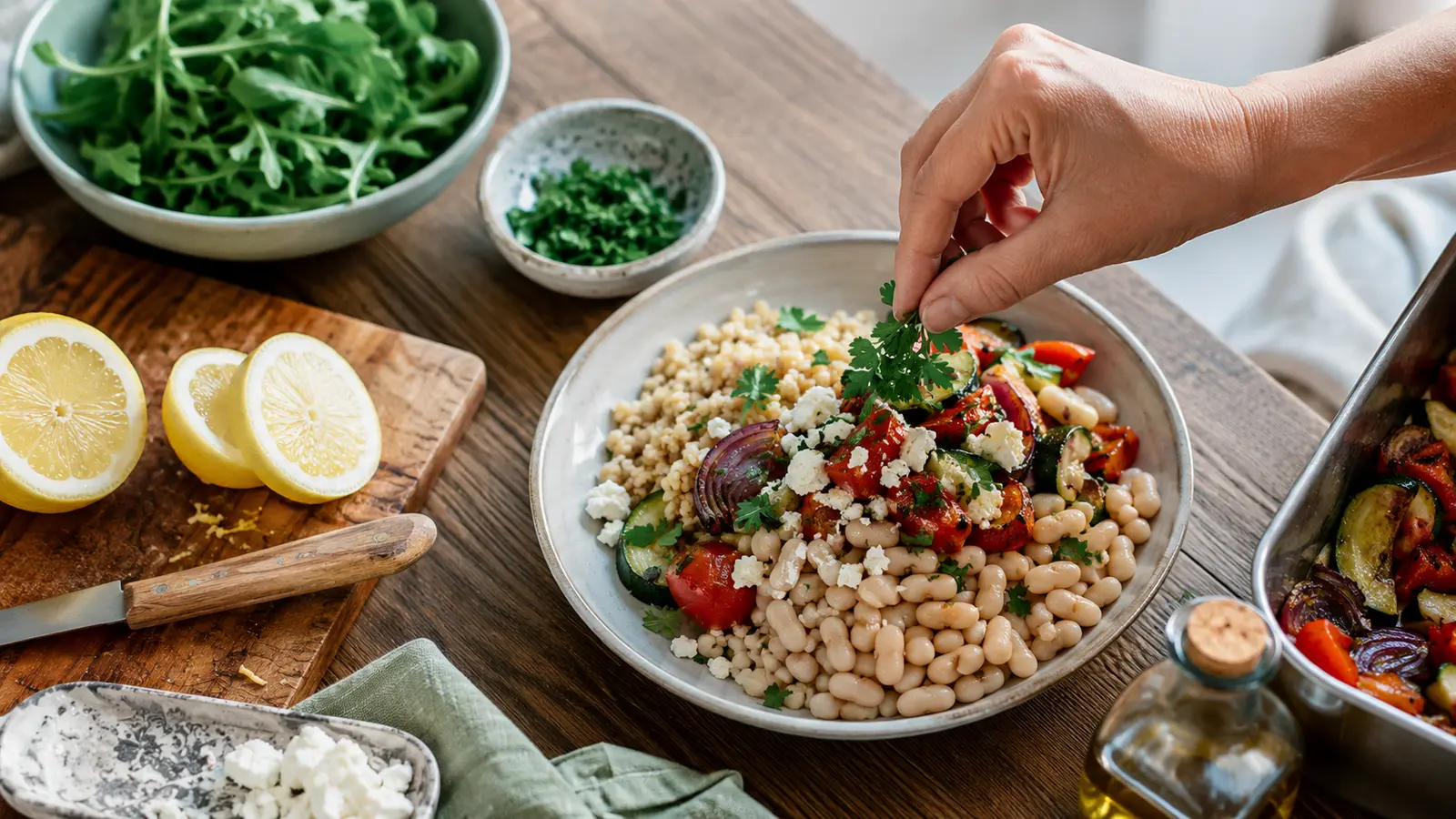
Say "Mediterranean diet" online and you get photos of a sunny terrace, a bottle of €30 olive oil, imported cheese and a glass of red wine. Looks great. Mostly marketing.
The real thing is much more boring, and that's exactly why it works. It's a way of eating you can repeat every day:
- lots of plants: vegetables, fruit, beans, whole grains, potatoes, nuts and seeds,
- olive oil as the main fat,
- fish and poultry more often than red and processed meat,
- dairy and eggs in normal amounts.
That's roughly how the American Heart Association describes it.
It's not a detox, it's not a guaranteed weight-loss plan, and no single food is the magic part. Pouring olive oil over a diet that is mostly crisps and salami doesn't make it Mediterranean.
And you don't need imported anything. Local vegetables, tinned beans, frozen fish, oats, brown rice and a normal supermarket olive oil do the job.
What the big study found (and what it didn't)
The best-known trial, PREDIMED, followed people in Spain who already had a high risk of heart disease. Those who ate a Mediterranean diet with extra olive oil or nuts had fewer major heart and blood-vessel events than those told to eat low-fat.
That's real evidence. But be honest about the limits:
- these were high-risk people, not everyone,
- they got education and some of the food for free,
- it doesn't prove this diet prevents every disease, or that one food is medicine.
How a plate looks
Vegetables take the biggest space. Add beans, fish, eggs or another protein. Then whole grains or potatoes, depending on how hungry you are. Flavour with olive oil, herbs, lemon, garlic and spices instead of heavy sauces and lots of salt.
A day could be:
- Breakfast: oats with fruit, plain yoghurt and a few nuts.
- Lunch: lentil and vegetable soup with whole-grain bread.
- Dinner: baked fish or beans, potatoes and a big salad.
- Snack, if you want: fruit or a small handful of unsalted nuts.
Examples, not rules. Your hunger, budget, culture and health change what fits.
Try it for one week, small
Don't throw out your whole kitchen. Pick one meal you usually eat badly and improve just that one for a week:
- Choose the meal you plan worst (for many people: lunch).
- Add a vegetable or fruit instead of banning something.
- Beans for one meal, fish for another, if that works for you.
- Swap one white grain for a whole-grain one you actually like.
- Write down only two things: was it filling, and would you eat it again?
If it doesn't survive a normal busy work week, it's not a diet, it's a fantasy.
Myths
- "Olive oil melts belly fat." No single food does that.
- "People in the Mediterranean don't get heart disease." They do.
- "Red wine is part of it." You don't have to drink. Don't start drinking for "health".
- "It cures diabetes." It can help manage risk. "Cure" is the wrong word.
- "More nuts and oil is always better." They're full of calories. Normal amounts.
When you need more than an article
Kidney disease, diabetes, gut problems, allergies, an eating disorder, pregnancy, or medicines that interact with food? A registered dietitian can adapt this way of eating to you safely.