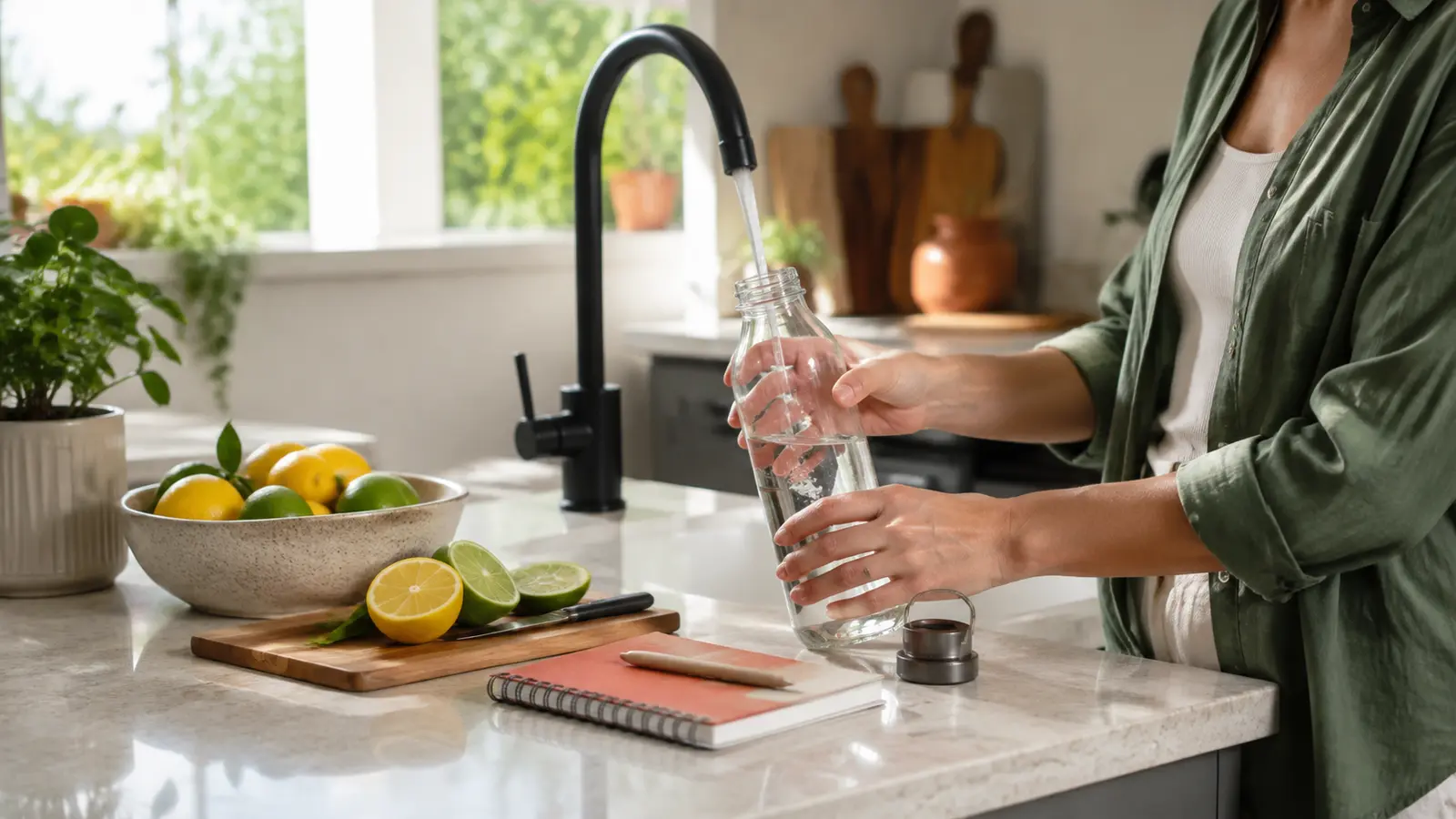
Eight glasses. Two litres. A gallon a day, with a giant bottle and a challenge on social media. Everyone has a number.
None of these is right for every adult, in every climate, on every day. And one of them can actually hurt you.
Your water comes from more than your bottle. Coffee, tea, milk, soup and food all count. And how much you lose changes with heat, exercise, fever, vomiting and diarrhoea.
The famous numbers are for all water
The US National Academies gave reference values for total water: about 3.7 litres a day for men and 2.7 for women. Those numbers include the water in food and every drink. And they describe healthy, inactive people in a mild climate.
So it does not mean "drink 3.7 litres of plain water". The same report says that for most healthy people, thirst and drinking with meals is generally enough under normal conditions.
What changes how much you need
- heat and humidity,
- longer or harder exercise,
- fever, vomiting or diarrhoea,
- pregnancy or breastfeeding,
- altitude and travel,
- how much watery food you eat,
- medicines that affect fluid balance,
- kidney, heart, hormone or other conditions.
Older adults can be at higher risk of getting dehydrated, partly because thirst can be weaker. But young people get dehydrated too, especially when sick, in the heat or during long exercise.
A simple routine instead of a number
If nobody gave you a fluid limit:
- Keep a drink where you are at the times you usually forget.
- Drink something with every meal.
- Plan extra for hot days, travel and workouts.
- Notice changes in your thirst, how often you pee, and how you feel.
- Adjust during the day instead of chugging a litre before bed.
Water is the easy default: no calories. Unsweetened tea, coffee and sparkling water count too, says the CDC. Just remember a drink can also bring a lot of sugar, alcohol or calories with it.
Urine colour: a hint, not a lab test
Dark yellow, strong-smelling pee and going less often can point to dehydration. But medicines, vitamins, food and some conditions change the colour too. One look doesn't diagnose anything.
Thirst, dry mouth, headache, tiredness and light-headedness can come with dehydration, but also with a dozen other things. If it keeps happening, see someone.
And no, crystal-clear pee all day is not the goal.
When "drink more" is the wrong advice
- With kidney disease, heart failure, low blood sodium and some other conditions, your doctor may give you a fluid limit. Follow that, not the internet.
- Long endurance events can need a plan for both water and salts.
- Drinking huge amounts too fast can be dangerous. It can dilute the sodium in your blood, which can be serious. That's why I think those gallon-a-day challenges are a bad idea.
Sick with vomiting or diarrhoea?
You lose water and salts. When it's a lot, plain water may not be enough. The NHS suggests asking a pharmacist about oral rehydration solutions. Small sips are easier when you feel sick.
Get medical help quickly if you can't keep anything down, feel weaker and weaker, get dizzy every time you stand, breathe fast or have a racing heart, get confused or unusually sleepy, or barely pee.
Myths
- "Everyone needs exactly eight glasses." Needs are different, and food counts.
- "Coffee doesn't count." It's mostly water.
- "More water burns fat." No.
- "A gallon challenge detoxes you." Marketing. And risky.
- "You need electrolyte drinks for every workout." Depends on how long, how hot and how much you sweat.
One week of noticing
For one week, just note the moments when drinking is hard or you need more: the long commute, a hot workplace, training, being ill, skipping a meal. Then fix the access problem: a bottle in the bag, a glass next to your desk.
The goal isn't to win at drinking. It's a routine that fits your day without ignoring thirst, symptoms or your doctor.